How Many Watts Do LED Recessed Lights Use?
Most LED recessed lights use about 6–15 watts, depending on their brightness and design. Compare lumens for light output and watts for energy use, since the two measures answer different questions.
On this page (7 sections)
- How many watts do LED recessed lights use?
- What is the difference between watts and lumens?
- How do you estimate electricity use?
- Does a 4 inch or 6 inch light use more watts?
- What should you compare besides wattage?
- How many watts do you need in a room?
- How many watts do LED recessed lights use for a practical choice?
Most LED recessed lights use about 6–15 watts per fixture, depending on their light output and design. Compare lumens for brightness and watts for power use, since a higher watt number alone doesn't tell you whether a light will suit your room.
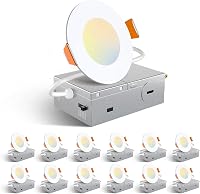
For example, the Ensenior 4 inch light uses 9 watts for 750 lumens, while the Ensenior 6 inch light uses 12 watts for 1,200 lumens. Compare both measures when planning a layout.
How many watts do LED recessed lights use?
Many LED recessed lights use about 6–15 watts each. Smaller or lower-output fixtures may use less, while brighter fixtures often use more.
The number depends on a light's design and output. Size alone won't tell you the wattage.
Check the watt rating before buying. For several lights, multiply that number by the fixture count to estimate their combined power use while on.
What is the difference between watts and lumens?
Watts measure power use, while lumens measure light output. Use lumens to compare brightness and watts to compare how much electricity a light uses.
A 10 watt light isn't automatically brighter than an 8 watt light. LED designs can produce different amounts of light from the same power, so check the lumen rating too.
Our guide to recessed lighting lumens explains how to compare brightness. For room planning, consider how many recessed lights a room needs, since fixture count and spacing affect the overall result.
How do you estimate electricity use?
Multiply a fixture's watts by the hours it runs, then divide by 1,000 to estimate kilowatt-hours. For a group of lights, multiply the wattage by the number of fixtures first.
For example, three 10 watt lights running for 5 hours use 150 watt-hours, or 0.15 kilowatt-hours. This estimates energy use, not the amount charged by a utility.
Usage adds up with long daily run times or many fixtures. Dimming can reduce light output, but power use at a dimmer setting varies by the light and dimmer.
Does a 4 inch or 6 inch light use more watts?
A 6 inch light may use more watts if it produces more light, but size doesn't set wattage by itself. Compare the watt and lumen ratings for the specific fixtures you're considering.
The Ensenior 4 inch model uses 9 watts and produces 750 lumens. Its 6 inch model uses 12 watts and produces 1,200 lumens.
Choose a size that suits your ceiling opening and desired light distribution. See recessed light sizes explained before settling on an opening size.
What should you compare besides wattage?
Compare lumen output, color temperature, dimmer compatibility, and installation fit. Wattage is one part of the choice, not a complete measure of how a recessed light will work in your space.
A selectable color temperature can help if you haven't settled on a warmer or cooler light. Both Ensenior options above have five settings, from 2700K to 5000K.
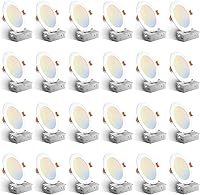
The Amico 4 inch light produces 800 lumens at 10 watts. Its 24 pack includes a junction box, and the light has five selectable color temperatures.
If you use a dimmer, confirm compatibility before buying. Our guide to choosing recessed lighting covers size, pack, color, and dimming.
Does a higher lumen rating mean higher wattage?
Not always, though a fixture with more lumens may use more watts. Compare each light's lumen and watt ratings to understand both output and power use.
The Ensenior 6 inch light produces 1,200 lumens at 12 watts, while the 4 inch light produces 750 lumens at 9 watts. These are specific product ratings, not a rule for every fixture.
How many watts do you need in a room?
Choose lights by the total brightness and layout the room needs, then check their wattage. The right number of fixtures depends on room size, ceiling height, placement, and how you use the room.
Don't choose a watt rating based only on floor area. A kitchen work area, bedroom, and hallway can need different light levels and placement, even when their footprints are similar.
For a room-by-room starting point, use the recessed lighting guide by room. If you’re planning a living area, recessed lighting for a living room covers count, size, and color.
How many watts do LED recessed lights use for a practical choice?
For recessed lighting wattage, start with lumens and layout, then compare watts among lights with similar output. A 9 watt light rated at 750 lumens and a 12 watt light rated at 1,200 lumens suit different brightness needs.
Choose a lower-output option when its lumens fit the room and planned spacing. Choose a brighter light when you need more light from each position, and check its size and dimmer compatibility before buying.
Use recessed lighting lumens explained to compare brightness, then review dimmable recessed light options if adjustable light matters for your setup.
Frequently asked questions
How many watts should LED recessed lights use?
Many LED recessed lights use about 6–15 watts each, but the right choice depends on the light output and room. Compare lumens to see how bright a fixture is, then check watts to understand its power use.
For a direct comparison, look at lights with similar lumen ratings.
Is a 9 watt recessed light bright enough?
A 9 watt light can be bright enough when its lumen output fits the room and layout. For example, one 4 inch Ensenior recessed light is rated at 750 lumens and 9 watts.
Consider the total number of fixtures, spacing, room use, and dimming needs before choosing.
Do higher watt recessed lights use more electricity?
A higher watt rating means a light uses more power while it is on. It doesn't show brightness by itself, so compare lumens too.
To estimate energy use, multiply watts by hours of use, then divide by 1,000 to get kilowatt-hours.
Can I replace a 60 watt bulb with an LED recessed light?
You can often replace a traditional bulb with a lower-watt LED that provides a similar lumen output, but check the fixture's compatibility and installation instructions. Match brightness by lumens rather than watts, and confirm the new light fits the opening and works with your dimmer if you use one.