Recessed Lighting for a Living Room: Count, Size and Color
For recessed lighting in a living room, start with the room’s size and layout, then choose a light count, trim size, and color temperature that suit your seating and activities. Use dimming and layered lamps to adjust the room after dark.
On this page (9 sections)
- How many recessed lights should a living room have?
- Where should recessed lights go in a living room?
- Are 4-inch or 6-inch lights better for a living room?
- Which color temperature suits a living room?
- How bright should living room recessed lighting be?
- Should living room recessed lights be dimmable?
- What should you check before buying living room recessed lights?
- How do you plan recessed lighting for a living room?
- Frequently asked questions
For recessed lighting in a living room, plan the layout around the room's size and seating, then choose a light count, fixture size, and color temperature that fit how you use the space. Dimmable fixtures and lamps can help you shift from brighter general light to a softer evening setting.
There isn't one correct number of ceiling lights for every living room. Ceiling height, furniture placement, window light, and the fixture's output all affect the result.
How many recessed lights should a living room have?
Use the room's dimensions and layout to set a starting count, then adjust for the fixture and the light you need. A simple spacing rule can help you sketch a first layout, but it doesn't account for every ceiling or beam pattern.
One rough method is to divide ceiling height by 2 and use that distance as a starting point between lights. For an 8 ft ceiling, that suggests about 4 ft between fixtures.
Treat it as a planning guide, not a guarantee of even light.
A room-size estimate also needs context. A 12 by 16 ft living room has 192 sq ft of floor area, but that alone can't tell you how many fixtures to install.
A high ceiling, dark surfaces, or a room with several task areas may call for a different plan than a low, bright room with open walls.
Sketch the room before choosing a count. Mark seating, tables, doorways, windows, and any areas used for reading or hobbies.
This helps you avoid placing a light directly over a seated person's head or leaving a dark corner.
For a broader plan, use this guide to recessed lighting layout. If you're comparing fixture diameters first, see recessed lighting sizes.
Where should recessed lights go in a living room?
Place general lights in a balanced pattern, then plan separate light for tasks or features that need attention. Keep the pattern in scale with the ceiling and avoid letting furniture dictate a scattered layout.
A simple grid can work in an open room. Start with the room's edges and center, then check whether the pattern gives the seating area and walking paths useful light.
Don't assume the grid must have equal numbers in every row if the room is irregular.
For reading, a ceiling light can support the area, but a nearby floor or table lamp puts light closer to the page. For a fireplace, artwork, or shelves, use a placement that lights the feature without shining into the seating area.
Pay attention to glare. A light directly above a sofa or television can be uncomfortable, depending on the trim, beam, and viewing angle.
Shift the layout or use a lamp to avoid relying on one bright point.
Consider how the room connects to nearby spaces. If the living room opens into a dining area, plan the two zones together while giving each a clear lighting purpose.
Our guide to recessed lighting for a dining room covers placement over a separate dining zone.
Are 4-inch or 6-inch lights better for a living room?
Choose 4-inch lights for a smaller ceiling opening or more focused placement, and consider 6-inch lights for broader general illumination. The better fit depends on the room's scale, brightness needs, and the fixture's output.
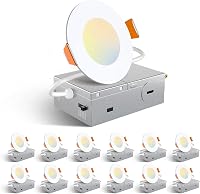
A 6-inch fixture can suit a larger living room or a plan built around fewer, wider openings. The Ensenior 12 Pack 6 Inch 5000K Dimmable is a 6-inch canless option with a stated output of 1200 lumens per light and a fixed 5000K color.
Its 5000K light is a crisp daylight tone, which may feel cool in a room meant for relaxed evenings. Choose it only if that color suits your finishes and lighting preferences.
A 4-inch light creates a smaller ceiling opening. The Sunco 24 Pack 4 Inch Slim Dimmable has selectable color temperature and a stated maximum output of 650 lumens per light, so it may fit a plan that uses more fixtures for gentle coverage.
Because its stated output is lower than the 6-inch options here, compare the planned fixture count and room needs before choosing. Don't assume smaller fixtures automatically make a room less bright; total light depends on output and how many you install.
Measure the cutout and check the fixture's installation requirements before cutting. For more on low-profile fixtures, read what slim wafer lights are.
Which color temperature suits a living room?
Warm white, often around 2700K to 3000K, is a common choice for a relaxed living room; neutral white can suit a brighter, more task-focused space. Pick a tone that looks right with your paint, flooring, and lamps.
Color temperature affects how a room feels, but it doesn't determine brightness. A warmer setting may make wood and cream finishes look cozy, while a cooler setting can look sharper against white walls.
Compare the tone in the room if you can, since samples can look different under store lighting.
Selectable CCT fixtures give you several color settings to choose from during installation. The Zouzai 24 Pack 6 Inch Dimmable offers 2700K, 3000K, 3500K, 4000K, and 5000K settings, plus dimming.
The Ensenior 24 Pack 6 Inch 5CCT also offers five settings from 2700K to 5000K, with a stated output of 1200 lumens per light. It suits a plan where you want to select the tone during installation and keep the same light type across the room.
Set every light in the same zone to the same temperature unless you have a clear reason to separate areas. Mixed color temperatures can make adjacent parts of one ceiling look uneven.
How bright should living room recessed lighting be?
Choose total light output for the room's tasks, then use dimming to make the room less bright when you want a softer setting. Lumens describe light output, while watts describe energy use.
A common planning estimate is about 10 to 20 lumens per square foot for general living-room lighting, but the right level depends on daylight, surface colors, ceiling height, and other lamps. For a 192 sq ft room, that rough range works out to 1,920 to 3,840 lumens from the combined lighting.
Use that calculation only as a starting point. A room with dark walls or limited daylight may need more output, while one with bright finishes and several lamps may need less overhead light.
Read how recessed light lumens work for more on comparing output.
If you use recessed fixtures for reading or crafts, plan a focused lamp or task light rather than making the entire ceiling brighter. This keeps the room flexible and can reduce glare from overhead fixtures.
Should living room recessed lights be dimmable?
Dimming is useful when a living room serves several purposes, from daytime activity to evening TV. Check that the fixture and dimmer are compatible before installation.
A dimmer can reduce light output, but it doesn't change a fixed-color fixture's color temperature. If you want both controls, look for a fixture with selectable color settings and a compatible dimmer.
The Ensenior 12 Pack 6 Inch 5000K Dimmable and Ensenior 24 Pack 6 Inch 5CCT, as well as the Zouzai and Sunco options above, are described as dimmable. Their stated dimming ranges differ, so check fixture compatibility with your setup.
Lamps still add useful flexibility. A floor lamp beside the sofa or a table lamp near a reading chair can provide light without turning on every ceiling fixture.
What should you check before buying living room recessed lights?
Confirm the size, color setting, output, dimmer compatibility, and installation fit before buying a pack. A low-profile light can help where ceiling space is limited, but the wiring and mounting still need to suit the ceiling.
Check these details:
- Diameter and cutout: Match the ceiling opening to the fixture instructions.
- Output: Compare lumens per light with the planned count.
- Color temperature: Decide whether you want a fixed tone or selectable settings.
- Dimming: Confirm the fixture works with the dimmer you intend to use.
- Installation: Check whether the ceiling and wiring suit the fixture's junction box and clips.
For a living room with existing recessed cans, a retrofit light may be a better fit than a canless fixture. For new openings or a ceiling without cans, compare the fixture's instructions and ceiling requirements before choosing.
Follow local electrical rules and the fixture's installation instructions. If you aren't sure about wiring or the ceiling structure, ask a qualified electrician to assess the work.
How do you plan recessed lighting for a living room?
Start with a sketch of the room, then choose the fixture count, size, color, and dimming around the way you use it. Use a spacing estimate only to begin the layout, and check it against the manufacturer's guidance and the ceiling.
Choose 6-inch lights if their size and output suit the room, or 4-inch lights if smaller openings fit your plan. Pick a warm or neutral color that works with your finishes, and use dimming or lamps to adjust the mood.
If the ceiling plan is still taking shape, follow the recessed lighting layout guide before settling on a count. For a different room, see recessed lighting for a bedroom.
Frequently asked questions
How many recessed lights do I need in a living room?
The right count depends on room dimensions, ceiling height, beam spread, and where you need light. Sketch the seating and walking areas, plan an even layout, then check the fixture maker's spacing guidance.
Treat any quick room-size estimate as a starting point, not a final lighting plan.
What size recessed lights are best for a living room?
Four-inch lights suit a quieter, more focused look, while 6-inch lights create a larger opening and can spread general light across a room. Choose based on ceiling height, room scale, desired brightness, and trim style.
Check the cutout size and fixture instructions before making ceiling holes.
What color temperature is best for living room recessed lighting?
Warm white around 2700K to 3000K often feels relaxed in a living room, while 3500K to 4000K can look more neutral. Pick one tone that works with your finishes and lamps.
Selectable CCT fixtures let you choose a setting during installation.
Should living room recessed lights be dimmable?
Dimmable lights give you more control over a living room used for reading, conversation, and watching television. Confirm that the fixture and dimmer are compatible, and check the dimming range.
A dimmer won't change color temperature unless the light has a separate color adjustment.