How Bright Should Recessed Lights Be? Lumens Explained
Choose recessed lighting lumens by estimating the room’s total light need, then dividing it among fixtures. Adjust for room use, ceiling height, daylight, other lights, and dimming.
On this page (11 sections)
- What do lumens mean for recessed lighting?
- How do you estimate recessed lighting lumens for a room?
- How many lumens should each recessed light provide?
- Does fixture size determine brightness?
- How bright should recessed lights be in each room?
- How do ceiling height and spacing change brightness?
- Should you choose brighter lights or add more fixtures?
- What should you check besides lumens?
- How do you set up and care for recessed lights?
- What mistakes make recessed lighting too bright or too dim?
- Which recessed lighting lumens should you choose?
Recessed lighting lumens tell you how much light each fixture emits, but your room’s brightness depends on the combined output and where the lights are placed. Estimate the room’s total need, divide it among fixtures, then account for daylight, lamps, ceiling height, and dimming.
A larger fixture is not automatically brighter. Check the lumens for each light and multiply by the number of fixtures to estimate the ceiling lights’ combined output.
What do lumens mean for recessed lighting?
Lumens measure the visible light a fixture emits. Use them to compare brightness across recessed lights, even when the fixtures use different wattages.
Watts measure electrical power use, not brightness. Two lights with the same wattage can produce different lumen outputs, so compare lumens when planning light levels.
Lumens don’t describe how light will feel in a room by themselves. Ceiling height, placement, beam spread, wall color, and lenses all affect what you see.
How do you estimate recessed lighting lumens for a room?
Estimate the room’s total light need, then divide it among the lights and other sources. The amount depends on room size and use, so one target won’t fit every home.
A simple planning method is to multiply the room’s area in square feet by a target foot-candle level. Foot-candles describe how much light reaches a surface; lumens describe light output at the source.
For example, a 10 by 12 ft room has 120 square feet. At a planning target of 20 foot-candles for general ambient light, the rough target is 2,400 lumens reaching the room, before accounting for other lights and light loss.
Treat this as a starting estimate, not a promise of how bright the room will look. Complex layouts, high ceilings, and specific task needs may call for a lighting professional.
How many lumens should each recessed light provide?
Divide the room’s estimated lumen target among the fixtures that will provide it. Then account for lamps, daylight, and task lights that already add brightness.
For a 2,400 lumen target with 6 ceiling fixtures, the arithmetic is about 400 lumens per fixture. The result may still feel different depending on spacing, beam pattern, and how much light nearby surfaces reflect.
If the fixtures produce more than the rough share, compatible dimming gives you a way to lower the brightness. Check that the lights and dimmer work together before installation.
For help choosing fixture diameter, see recessed lighting sizes explained. Size helps determine how a light fits the ceiling, while the lumen rating tells you its output.
Does fixture size determine brightness?
No, fixture size alone doesn’t tell you how many lumens a light produces. Check the rating for the exact model and compare it with your room plan.
A 4 inch light can produce substantial output, while a 6 inch light can produce less or more depending on its design. The Amico 4 inch canless wafer provides 800 lumens per light, and its 6 inch counterpart provides 1,050.
The Ensenior 6 inch light provides 1,200 lumens. These examples show why it helps to compare the output number instead of relying on diameter.
If you’re weighing a smaller ceiling opening, compare 3, 4, 5, and 6 inch recessed light sizes before choosing. Match the size to the ceiling and layout as well as the desired output.
How bright should recessed lights be in each room?
Match light levels to what you do in each room. General lighting, task lighting, and accent lighting can work together, so ceiling fixtures don’t have to do every job.
How many recessed lighting lumens work for a kitchen?
Plan clear general light plus focused task light for counters and sinks. A bright ceiling alone can still leave shadows on work surfaces if fixtures are poorly placed.
The Amico 24 Pack 6 Inch with Junction Box suits a large project where you want to plan a consistent set of fixtures. Each light provides 1,050 lumens, and its five selectable color temperatures let you choose a tone before installation.
The 24 pack is a poor fit for a small room or a layout that needs only a few fixtures. Count your planned openings first, then compare the total output with your target.
How many lumens work for a living room?
Use ceiling lights for broad coverage and layer in lamps for reading or softer evening light. This gives you options for conversation, relaxing, and other activities.
A compatible dimmer can help you adjust brightness throughout the day. See recessed lighting for a living room for ideas on placement and color.
How many lumens work for a bedroom?
Choose adjustable general light and use bedside lamps for focused reading. Lowering the ceiling lights can make it easier to shift from getting dressed to winding down.
Check the light and dimmer compatibility before you plan around dimming. Our guide to dimmable recessed lights covers options for adjustable output.
How many lumens work for a hallway?
Plan enough light for clear movement and visibility, based on the hallway’s length and layout. Hallways usually don’t need the same focused task light as kitchen counters.
Choose fixture count and output together. Widely spaced lights may leave dark areas between them, while tightly grouped lights can create bright pools.
How do ceiling height and spacing change brightness?
Higher ceilings and wider spacing can make light feel less concentrated on the surfaces you use. A lumen rating gives you total output, while the layout determines where that light goes.
Fixtures placed too close may create glare or bright pools. Those placed too far apart can leave dark gaps.
Use a layout plan to coordinate fixture count, spacing, and room dimensions. The recessed lighting layout guide walks through a simple planning process.
Should you choose brighter lights or add more fixtures?
Choose based on room coverage and comfort, not the highest lumen number. Several well-spaced lights can spread light more evenly than a few very bright ones.
More fixtures also mean more ceiling openings and wiring work. Compare the planned output and spacing before changing the count.
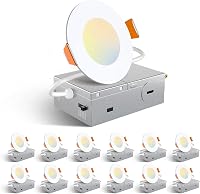
The Amico 12 Pack 4 Inch Canless Wafer suits plans that call for smaller fixtures and 800 lumens per light. Its five selectable color temperatures are useful when you want to choose the light’s tone before installation.
Skip it if your plan needs more output from each fixture or calls for a 6 inch opening. For another 6 inch option, compare the Amico recessed lights with a junction box against your layout and output needs.
What should you check besides lumens?
Check color temperature, dimming, and installation conditions along with output. These details affect how a fixture works in your room after you’ve chosen a brightness range.
Color temperature, measured in kelvins, describes whether light appears warmer or cooler. A 5CCT fixture gives you several tone choices, but changing the tone doesn’t replace planning for enough light.
Before cutting the ceiling, confirm the fixture’s required opening, clearance, and location rating. Follow its installation instructions, including wiring requirements, and consult an electrician if the work is outside your experience.
How do you set up and care for recessed lights?
Plan the layout and check the ceiling before cutting any openings. Count the fixtures, mark their positions, confirm clearance, and make sure the chosen light suits the location.
For a canless light, follow the model’s cutout instructions and use its template if one is included. Connect the junction box and secure the fixture as directed; turn off power before electrical work and get professional help if you’re unsure.
Keep the lights clean by following the care instructions and avoiding harsh cleaners or excess moisture. For damp locations, check the fixture’s rating and keep it away from direct water spray unless the manufacturer permits that use.
What mistakes make recessed lighting too bright or too dim?
The most common mistake is choosing fixtures by diameter or wattage instead of total lumens and layout. A good plan considers output, spacing, room use, and other light sources together.
Avoid these planning errors:
- Adding up fixture lumens without considering lamps, daylight, or task lighting.
- Putting too few lights far apart, which can leave dark areas.
- Using high-output fixtures close together, which can create glare.
- Assuming a dimmer will work without checking compatibility.
- Cutting openings before confirming the required size and ceiling clearance.
- Treating a damp rating as permission to expose a light to direct water.
Which recessed lighting lumens should you choose?
Start with the room’s area and activities, estimate a total output, then divide it among fixtures. Check each light’s lumen rating, include lamps and daylight in your plan, and use compatible dimming if you want more control.
Choose the Ensenior 6 inch option when you want 1,200 lumens per light and five color choices. Pick the Amico 6 inch option for a multi-light plan at 1,050 lumens each, or the Amico 4 inch option when a smaller fixture and 800 lumens suit the layout.
Use the recessed lighting layout guide to plan positions, or read how to choose recessed lighting for a broader checklist.
Frequently asked questions
How many lumens should a recessed light have?
There isn't one right output for every recessed light. Estimate the room's total light need and divide it among the fixtures.
Account for lamps and daylight, then compare each light's lumen rating with its share and consider dimming for different activities.
Are more lumens always better for recessed lights?
No. Too much output can feel harsh or cause glare, especially when lights are close together or poorly placed.
Estimate the room's total need, account for other light sources, and choose compatible dimming controls if you want to adjust brightness.
How many lumens do 6 inch recessed lights have?
Output varies by model, so check the lumen rating instead of assuming all 6 inch lights are alike. The Ensenior 6 inch option in this guide provides 1,200 lumens per light, while the Amico 6 inch option provides 1,050.
Should recessed lights be brighter in a kitchen?
Kitchens often need clear light for counters and work areas, so plan general ceiling light alongside task lighting. Place light where you need it, and consider dimming so the room can feel calmer when you aren't cooking.