How to Choose Recessed Lighting: Size, Pack, Color, Dimming
Choose recessed lighting by matching the fixture to your ceiling, then set size, brightness, color temperature, dimming and pack count. Measure before cutting holes, and check whether you need a canless wafer or a retrofit light for an existing can.
On this page (9 sections)
- How do you choose recessed lighting for your ceiling?
- What size recessed light should you choose?
- How bright should recessed lights be?
- Which color temperature should you choose?
- Should you choose dimmable recessed lights?
- How many lights should you buy in a pack?
- Which recessed lighting option fits your plan?
- What should you check before installation?
- How to choose recessed lighting for your room
Choose recessed lighting by matching the fixture to your ceiling, then set size, brightness, color temperature, dimming and pack count. Measure before cutting holes, and check whether you need a canless wafer or a retrofit light for an existing can.
For many new installations, a slim canless light works where a traditional housing may not fit. If you have existing recessed cans, a retrofit light may be the simpler match.
Our guide to recessed light types and sizes explains the main fixture options.
How do you choose recessed lighting for your ceiling?
Choose a fixture that fits the ceiling you have and the installation you plan. Canless wafers connect to a junction box, while retrofit lights are made to fit an existing recessed can.
A canless wafer may help when joists or limited ceiling depth make a housing difficult to place. Check the required ceiling clearance, hole size and wiring setup before making a cut.
A retrofit light uses the existing can as part of the installation. Confirm the can’s size and connection type first, since “retrofit” does not mean every model fits every old fixture.
For more detail on canless options, see our slim wafer lights guide. If you're replacing older cans, the LED retrofit lights guide covers that path.
What size recessed light should you choose?
Choose the size that fits the room’s scale and your lighting plan, then check the fixture’s actual cutout dimensions. The labeled size alone doesn’t tell you the hole size, and a larger light is not automatically brighter or better.
Four-inch fixtures can work well when you want a smaller opening or are placing lights in a tighter pattern. Five- and 6-inch models are common choices for broader general lighting, but spacing and output still matter.
Check the ceiling material, joist positions and fixture instructions before cutting. Our recessed lighting sizes guide explains what 3, 4, 5 and 6 inch labels mean.
How to choose recessed lighting size for a room
Start with the room’s purpose and layout. A kitchen counter, a hallway and a living room need different patterns, even if they use the same fixture size.
Draw the room and mark the areas that need light, such as counters, seating or a walkway. Then compare the planned spacing with the fixture’s light output and beam spread, if those details are available.
Don’t choose a fixture count from room area alone. Ceiling height, furniture, wall color and the amount of daylight can all affect how bright the room feels.
How bright should recessed lights be?
Choose brightness by looking at the fixture’s lumen output and the work or activity in the room. Watts describe power use, while lumens describe how much light a fixture produces.
A 4-inch Amico canless wafer in this guide is rated at 800 lumens. The 6-inch Amico canless light is rated at 1,050 lumens, and the 6-inch Ensenior light is rated at 1,200 lumens.
Those figures can help compare these options, but they don’t determine how many fixtures your room needs. For a closer look at brightness planning, read how recessed light lumens work.
Which color temperature should you choose?
Choose color temperature based on the look you want and how you use the room. Lower Kelvin values look warmer, while higher values look cooler and more daylight-like.
A selectable CCT fixture gives you more flexibility before installation. The Ensenior and both Amico canless options in this guide offer five selectable settings, though the exact ranges differ.
For a room where you already know the desired tone, a fixed color can be easier to plan around. If you’re undecided, select a fixture with switchable color temperature and set it before installation.
How to choose recessed lighting color for connected rooms
Choose one color temperature for rooms that connect visually, such as an open kitchen and living area. This keeps the light from shifting noticeably as you move between spaces.
If different rooms have separate uses, you can choose different tones, but keep transitions in mind. A warmer bedroom beside a cooler hallway may look intentional, while small changes between adjacent fixtures can look inconsistent.
The selectable switches are usually set on the fixture or junction box before installation. Check the location of the switch and choose the setting before the light is put into the ceiling.
Should you choose dimmable recessed lights?
Choose dimmable fixtures if you want to adjust brightness for different activities or times of day. Check the stated dimming range and control compatibility before buying.
The Ensenior 6-inch model is described as dimming from 5% to 100%. The Amico retrofit option is described as dimming from 10% to 100%, and its compatibility note excludes smart dimmers.
A dimmer switch and a dimmable fixture must work together. Check the light’s instructions and the dimmer manufacturer’s compatibility information, especially if you want a low minimum brightness or use smart controls.
For more options, see our dimmable recessed lights guide.
How many lights should you buy in a pack?
Choose a pack after you settle the layout and fixture count. Count the lights you plan to install first, then compare that number with the pack sizes available.
Buying a larger pack can simplify a project with many fixtures, but only if the lights suit every location in the plan. Check that the same size, color settings and installation style work throughout the room.
For a small room or a few replacements, a smaller pack may leave fewer unused fixtures. For a whole-room installation, consider whether you want spare lights for future replacement, while checking that the chosen product’s specifications fit the project.
Which recessed lighting option fits your plan?
Choose the product type that matches the ceiling and the number of lights you need. These examples cover 4-inch and 6-inch canless options plus a retrofit choice for existing cans.
Ensenior 12 Pack 6 Inch 5CCT
This Ensenior option suits a plan that calls for 6-inch canless lights with selectable color and higher stated output. It offers five settings from 2700K to 5000K and is rated at 1,200 lumens.
Its junction box has the color switch, so choose the setting before installation. The light is also described as dimmable from 5% to 100%.
Consider it when you need 6-inch fixtures and want to set the color before fitting them. Check the cutout and ceiling requirements against your plan.
Amico 24 Pack 6 Inch with Junction Box
This Amico option suits a larger project that needs many 6-inch canless fixtures. Each light is rated at 1,050 lumens, and the selectable color range runs from 2700K to 5000K.
The manufacturer describes it as IC rated and damp rated. Damp rated does not mean waterproof, so keep it away from direct water spray.
Consider it when the project needs a 24-pack of 6-inch lights and the ceiling can accommodate the stated installation requirements.
Amico 24 Pack 5/6 Inch Retrofit
This Amico retrofit option suits a ceiling with existing cans and a compatible E26 base. It offers five color temperatures from 2700K to 6000K and a stated dimming range of 10% to 100%.
The maker describes the lights as damp rated and says they’re compatible with most dimmers except smart dimmers. Confirm the can size and control compatibility before buying.
Consider it when you want to update existing cans without choosing a canless fixture.
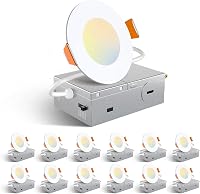
Amico 12 Pack 4 Inch Canless Wafer
This Amico option suits a layout that calls for smaller 4-inch canless fixtures. Each light is rated at 800 lumens and offers five color settings from 2700K to 5000K.
The junction box has the color switch, and the manufacturer describes the light as IC rated and damp rated. Check the cutout and ceiling clearance before installation.
Consider it when a 4-inch fixture fits your room plan and a 12-pack covers the count.
What should you check before installation?
Check the fixture’s cutout size, ceiling clearance, wiring and location rating before making holes or connecting power. Keep the manufacturer’s instructions available during installation.
For the Amico 6-inch canless option, the recommended cutout is 6.25 inches, with a stated range of 6.2 to 6.5 inches. For the 4-inch Amico wafer, the recommended cutout is 4.25 inches, with a stated range of 4.2 to 4.8 inches.
The Ensenior product information describes a 2-inch clearance requirement. Verify the exact requirements for the fixture you choose and check for joists, ducts, wiring and insulation where the light will sit.
Damp rated fixtures are intended for damp locations, not direct water spray. For work involving new wiring or uncertain ceiling conditions, use a qualified electrician.
How to choose recessed lighting for your room
Choose recessed lighting by starting with ceiling type and layout, then compare size, lumens, color temperature, dimming and pack count. A suitable fixture is one that fits both the room plan and the ceiling.
Pick a canless wafer when the installation calls for a shallow fixture and junction box. Choose a retrofit when you have compatible existing cans.
Then use the simple recessed lighting layout guide to plan fixture positions and count before buying.
Frequently asked questions
How do I choose the right size recessed light?
Choose a size that suits the room and ceiling layout, then verify the cutout and fixture requirements before buying. Four-inch lights can suit smaller spaces or tighter layouts, while 5- or 6-inch options cover broader uses.
The fixture size alone does not tell you how many lights a room needs.
What color temperature should I choose for recessed lights?
Choose a warmer color such as 2700K or 3000K for a softer look, and consider 3500K to 5000K when you want a more neutral or cooler appearance. If you're unsure, selectable CCT lets you choose among set color temperatures before installation.
How many recessed lights should I buy?
Plan the layout and count the fixtures before choosing a pack. The right number depends on room shape, ceiling height, light output and the tasks in each area.
Add up the planned fixtures, then choose a pack size that covers the layout without buying far more than you need.
Can recessed lights be dimmed?
Many LED recessed lights support dimming, but the dimming range and compatible controls vary by model. Check those details against the dimmer you have or plan to install.
For example, the Amico retrofit option described here says it dims from 10% to 100% and excludes smart dimmers.