Recessed Lighting for Low Ceilings: Which Lights Fit?
Slim, canless wafer lights are often a practical fit for low ceilings because they need less space above the drywall than traditional recessed cans. Check the fixture's required clearance and installation instructions before you buy.
On this page (7 sections)
- Recessed Lighting for Low Ceilings: Which Lights Fit?
- Which recessed lights fit a low ceiling?
- What should you check before choosing a fixture?
- Should you choose 4 inch, 6 inch, or 7 inch lights?
- Are wafer lights safe around insulation?
- Can recessed lighting make a low room feel brighter?
- What is the practical choice for a low ceiling?
Recessed Lighting for Low Ceilings: Which Lights Fit?
Slim, canless wafer lights are often a practical fit for low ceilings because they need less space above the drywall than traditional recessed cans. Check the fixture's required clearance and installation instructions before you buy.
A low ceiling can leave little room for a deep housing, wiring, and other ceiling parts. A thin fixture may fit where a standard can does not, but you still need to check the space above the ceiling and the size of the opening.
If you’re comparing fixture styles, start with our guide to slim wafer lights. For a room-specific plan, see recessed lighting by room.
Which recessed lights fit a low ceiling?
Canless wafer lights are usually the first type to consider when ceiling space is tight. Their light panel sits close to the ceiling, while a separate junction box connects to the wiring above it.
A traditional recessed can needs space for its housing. In a shallow ceiling cavity, that housing may conflict with a joist, insulation, or ductwork.
A wafer light can reduce the depth needed, but it still needs room for its junction box and wiring.
Don’t choose by panel thickness alone. Check the fixture’s required clearance, cutout size, insulation rating, and wiring instructions, then measure the space where the junction box will go.
How much clearance do recessed lights for low ceilings need?
The needed clearance depends on the specific fixture and the parts above your ceiling. Some slim models need only a small amount of space, but the junction box, wiring, joists, and insulation still need to fit as directed.
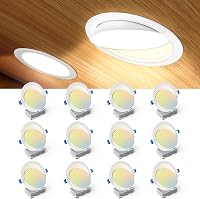
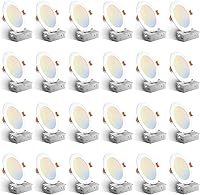
The Amico 12 Pack 6 Inch Ultra-Thin and Amico 24 Pack 4 Inch Ultra-Thin each require as little as 2 inches of ceiling space. That minimum does not guarantee either fixture will fit every ceiling.
Inspect the ceiling cavity before cutting. If you can’t confirm the space or wiring route safely, ask a qualified electrician to check it.
What should you check before choosing a fixture?
Measure the ceiling cavity and plan the light layout before picking a size. The right fixture must fit the space, cover the cutout, and provide light where you need it.
Check these details for each light:
- Fixture depth and box clearance: Confirm the whole fixture fits above the finished ceiling.
- Joist location: Check whether the cutout or junction box would run into framing.
- Cutout size: Use the fixture’s dimensions when marking the opening.
- Insulation rating: Confirm whether the light can contact insulation and follow its instructions.
- Dimming and color settings: Check that the fixture works with the dimmer and light color you want.
The recessed lighting sizes guide explains common light sizes. If you’re planning more than one fixture, use the recessed lighting layout guide to think through spacing before you cut.
Should you choose 4 inch, 6 inch, or 7 inch lights?
Choose a size that fits the room and the planned ceiling openings. A smaller diameter can suit a tighter layout, while a larger panel may cover a wider opening; neither size automatically works better in every low-ceiling room.
The Amico 12 Pack 6 Inch Ultra-Thin has the highest score of the three picks and offers 5 selectable color temperatures with a 1,050-lumen output. It requires as little as 2 inches of ceiling space, but confirm the box and wiring fit your cavity.
The Amico 24 Pack 4 Inch Ultra-Thin has a smaller panel, 5 selectable color temperatures, and an 800-lumen output.
The Amico 12 Pack 7 Inch Ultra-Thin has 5 selectable color temperatures and a 1,300-lumen output. Its wider panel can cover some oversized openings from conventional 6 inch cans, so measure the existing hole before choosing it.
A larger panel does not mean you should put fewer lights in the room without checking the layout. Compare fixture output, spacing, and the room’s purpose before deciding on a count.
Are wafer lights safe around insulation?
Use a fixture rated for the ceiling conditions and install it as directed. An insulation-contact rating applies only to the fixture and installation conditions covered by its instructions.
The three Amico models above are IC rated, which means they are permitted to contact ceiling insulation. Confirm the rating on the exact model you buy and follow its installation instructions.
For general guidance, the U.S. Department of Energy explains LED lighting and energy use.
The Electrical Safety Foundation International also shares electrical safety guidance.
If the ceiling cavity contains old wiring, damaged insulation, or hard-to-reach connections, get an electrician’s help before installing a new fixture. Don’t force a junction box into a cramped space or cover parts that need clearance.
Can recessed lighting make a low room feel brighter?
It can provide useful room light without a hanging fixture, but layout matters as much as fixture depth. Even spacing can help avoid bright spots and dark gaps, while lamps or task lights can fill areas that recessed fixtures don’t cover.
Choose light output for the room and its use, not just the fixture’s diameter. A kitchen work area may need focused light, while a bedroom may benefit from a softer setting; dimming can help you adjust the level when the fixture supports it.
For room-specific ideas, compare recessed lighting for a living room and recessed lighting for a bedroom. If your ceiling slopes, see recessed lighting for vaulted ceilings before choosing a fixture.
What is the practical choice for a low ceiling?
Pick the fixture that fits the cavity, cutout, and lighting plan you have. Start with a slim wafer light when the ceiling is shallow, then compare sizes and output after confirming the box and wiring will fit.
Choose the 4 inch option for a smaller panel, the 6 inch option for a middle size, or the 7 inch panel when its wider coverage suits the opening. Check the exact installation instructions before ordering or cutting, and ask an electrician if the ceiling cavity is unclear.
Frequently asked questions
What type of recessed lighting works best for a low ceiling?
Slim, canless wafer lights are often a useful choice when the ceiling cavity is shallow, since many models place a thin panel in the ceiling and connect to a separate junction box. Check the exact clearance, cutout size, insulation rating, and installation directions for the fixture you choose.
How much space do recessed lights need above a low ceiling?
The required space depends on the fixture. Some slim lights need only a few inches, while traditional recessed housings need more room; check the installation instructions and account for joists, insulation, wiring, and the junction box before cutting the ceiling.
Are recessed lights bright enough for a low-ceiling room?
Yes, recessed lights can provide useful general light in a low-ceiling room when you choose enough fixtures and suitable light output. Plan their spacing and brightness around the room's size, ceiling height, and tasks, then add lamps or focused lighting where you need more light.
Can recessed lights touch insulation in a low ceiling?
Only if the fixture is rated for contact with insulation and installed as directed. Check the fixture label and instructions before covering it; keep insulation away from any parts that the manufacturer says must remain clear, including the junction box or driver.