Recessed Lighting for Vaulted Ceilings: What Works?
Adjustable gimbals are a strong choice for recessed lighting on a vaulted ceiling because they can aim light down or toward a wall from a slope. Choose the size and tilt range for your target, then check the fixture’s installation requirements.
On this page (7 sections)
- Why use adjustable recessed lights on a vaulted ceiling?
- How do you plan recessed lighting for a vaulted ceiling?
- Which features matter when choosing vaulted ceiling lights?
- Can slim wafer lights work on a vaulted ceiling?
- What should you check before installing recessed lights?
- How can you reduce glare from vaulted ceiling lights?
- Which recessed lighting should you choose for a vaulted ceiling?
Adjustable gimbal lights are a strong choice for recessed lighting on a vaulted ceiling because you can aim their beams down or toward a wall from the slope. Plan each light around the room's use, then check the fixture's slope, clearance, and insulation requirements before installation.
A vaulted ceiling can send a fixed downlight's beam away from the spot you want to illuminate. Aiming and spacing matter as much as the number of fixtures.
Why use adjustable recessed lights on a vaulted ceiling?
An adjustable gimbal lets you direct light from a sloped ceiling. Its lens tilts, so you can aim the beam at a seating area, artwork, or another useful surface instead of following the slope.
A fixed light can still work for general lighting if its beam lands in the right place. For a steep slope, task lighting, or a wall feature, a gimbal gives you more control over direction.
Tilt ranges vary. Ensenior and Amico’s 6-inch gimbals tilt up to 90 degrees, while the Sunco retrofit tilts up to 45 degrees.
Choose a tilt range that can reach your target. A wide angle is useful for aiming toward a wall, but avoid pointing the beam into someone’s eyes.
How do you plan recessed lighting for a vaulted ceiling?
Mark the room’s main activities and aim each light toward a useful surface. Start with places where you read, cook, walk, or gather, then decide whether you also want to highlight a wall or feature.
Don't divide the ceiling into equal spaces without considering what’s below. A neat-looking grid can leave a work surface dim or put a bright beam directly over a seat.
Think in layers. Recessed lights can provide general or focused light, while wall sconces, pendants, or floor lamps can fill gaps that ceiling fixtures don’t cover well.
Use our guide to recessed lighting layout to map positions around the room. For a lounge area, see recessed lighting for a living room for room-specific planning.
How does a vaulted ceiling slope change beam direction?
A slope changes where a fixture’s beam lands, so plan its direction before cutting. Mark the target on your room sketch, then picture a line from each light opening to that surface.
A gimbal can redirect a beam, but it can’t fix every placement problem. If a light would need to point across the room or toward an occupied seat, try a different position or another type of fixture.
How far apart should vaulted ceiling lights go?
Use the fixture maker’s spacing guidance as a starting point, then account for ceiling height and beam spread. There’s no single spacing that suits every vaulted room.
Keep lights far enough apart to limit harsh overlap, but close enough to avoid dark patches. Compare common fixture diameters in our guide to recessed lighting sizes.
Which features matter when choosing vaulted ceiling lights?
Match the tilt and size to your lighting target, then check color options and installation requirements. Rotation turns the lens toward a target, while tilt controls how far it can point off-center.
Selectable color temperature can help coordinate the lights with fixtures elsewhere in the room. Dimming can give you a lower light level for evening use, as long as the light and dimmer are compatible.
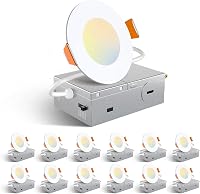
For an existing ceiling with compatible cans, a retrofit light may save you from replacing the housing. For a new installation, a canless light with a junction box is an option, but you still need to check wiring, ceiling clearance, slope, and insulation requirements.
Who should choose the Amico 6-inch gimbal?
Choose the Amico if you want a 6-inch canless gimbal with broad aiming and five color choices. Its lens rotates 360 degrees and adjusts up to 90 degrees, with selectable color temperatures from 2700K to 5000K.
It suits a new layout where a 6-inch opening fits the room and the beam needs to be aimed. Skip it if you have existing cans and want a retrofit, or if you need smaller openings.
When does a 3-inch gimbal make sense for a vaulted ceiling?
Choose the POPANU when smaller openings and focused accents suit your plan. It rotates 360 degrees, tilts up to 30 degrees, and offers five color temperatures.
Its tilt range is more limited than the 6-inch gimbals, so skip it if your slope requires a sharper angle to reach the target. Its output reaches 851 lumens at 5000K.
Is the Sunco retrofit right for your vaulted ceiling?
Choose the Sunco if you have compatible 5-inch or 6-inch recessed cans and want an adjustable retrofit. Its lens swivels 360 degrees and tilts up to 45 degrees.
Check your can size and setup before buying. Skip this option for a new canless installation without compatible housings.
Can slim wafer lights work on a vaulted ceiling?
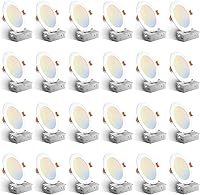
Some slim wafer lights fit sloped ceilings, but their slope limits and mounting instructions vary by model. A fixed wafer can suit general lighting when its beam lands well, while an adjustable gimbal is easier to aim at a particular target.
A shallow fixture can help where ceiling space is limited, but thin construction alone doesn’t make it suitable for every slope. Check that the model fits the ceiling material and insulation conditions.
See our guide to slim wafer lights for more on their design and common uses.
What should you check before installing recessed lights?
Confirm the ceiling structure, wiring route, fixture clearance, and insulation rating before cutting a hole. Follow the fixture instructions and local electrical requirements, and use a qualified electrician if the wiring or ceiling assembly is unfamiliar.
Check whether the fixture is rated for contact with insulation. An IC rating matters when insulation can touch the light or its junction box; don’t assume every recessed light has one.
Confirm that the fixture is approved for the ceiling slope and thickness. If its instructions don’t cover your setup, ask the manufacturer or an electrician before installing it.
The U.S. Department of Energy’s guide to lighting choices covers efficient lighting options.
The fixture instructions set the installation limits for your specific light.
How can you reduce glare from vaulted ceiling lights?
Aim gimbals away from direct lines of sight, especially above seats where people look upward. Pointing light toward a wall can spread it across the room with less direct glare.
Dimming can help when full brightness feels harsh. Choose a compatible dimmer and follow the light and dimmer instructions.
If the room still feels uneven, add a lamp or wall light instead of crowding the ceiling with more fixtures. Different light sources can serve reading, conversation, and circulation.
Which recessed lighting should you choose for a vaulted ceiling?
Choose a gimbal when you need to aim the beam, then match its size and tilt range to the target. The 3-inch POPANU suits smaller openings and focused accents; the Ensenior or Amico 6-inch models fit plans that call for larger canless gimbals with more tilt.
Choose the Sunco retrofit only if you have compatible cans. For a new canless installation, check slope, clearance, wiring, and insulation requirements before buying.
Map the light positions before you cut, and use the fixture instructions to confirm spacing and fit. For more room-by-room ideas, browse the lighting by room guide.
Frequently asked questions
What type of recessed lighting works best on a vaulted ceiling?
Adjustable gimbal recessed lights are a practical choice for a vaulted ceiling because their lenses can tilt to direct light from a slope. Choose the tilt range based on where you want light to land, then check the fixture’s instructions for ceiling slope, clearance, and installation requirements.
How far apart should recessed lights be on a vaulted ceiling?
There isn't one spacing that suits every vaulted ceiling. Room dimensions, ceiling height, beam spread, and each light's job affect placement.
Sketch the ceiling and furniture, then use the fixture maker's spacing guidance.
Adjust the plan to avoid dark gaps and harsh overlap.
Can slim wafer lights go on a vaulted ceiling?
Some slim wafer lights can work on sloped ceilings, but suitability depends on the model's mounting design and slope limit. Check its instructions before cutting holes.
If you need to aim light at a wall or feature, compare an adjustable gimbal with a fixed wafer.
Do recessed lights need to be IC rated in an insulated vaulted ceiling?
If insulation can touch a fixture or junction box, choose a light rated for that installation and follow its instructions and local electrical requirements. IC-rated fixtures are designed for contact with insulation, but you still need to check clearances, wiring, and the ceiling assembly.