Recessed Lighting for a Dining Room: Where to Put It
For recessed lighting in a dining room, center a small group of lights around the table and keep them clear of the table's edge. Use a dimmer and layer the ceiling lights with a pendant or other fixture when you want a softer focus on meals.
On this page (7 sections)
- Where should recessed lights go in a dining room?
- How do you plan a balanced layout?
- How bright and warm should the light be?
- Should recessed lights be the only dining room lights?
- Which recessed light size fits a dining room?
- What should you check before installing dining room lights?
- How do you choose recessed lighting for a dining room?
For recessed lighting in a dining room, center a small group of lights around the table and keep them clear of the table's edge. A dimmer helps you adjust the ceiling light for meals, cleanup, and other uses.
Plan around the table first, then account for nearby walls, cabinets, and other fixtures. Recessed lights work best as part of a layer: use them for general room light and let a pendant, chandelier, or wall light add a more focused glow.
Where should recessed lights go in a dining room?
Place recessed lights in a balanced pattern around the table area, with enough distance from the table edge to avoid shining straight into seated guests' eyes. The exact spacing depends on the room and ceiling, so mark the layout on paper before cutting holes.
Start by drawing the table in its usual position. Add lights around its footprint rather than placing a single row down the center, which can create uneven light across the table and room.
Keep lights clear of ceiling beams, joists, and other obstacles. If the layout is hard to fit around those features, slim wafer lights may offer more placement options where their installation requirements suit the ceiling.
A chandelier or pendant can serve as the focal point above the table, while recessed lights fill the surrounding area. For a broader room-by-room overview, see our guide to lighting by room.
How do you plan a balanced layout?
Measure the room and table, then sketch a symmetrical layout before choosing light locations. A layout should support the table and the paths around it, not just create a neat grid across the ceiling.
Mark the table's center and edges, then note doors, windows, cabinets, and seating areas. If the table is centered in the room, use it as the layout anchor; if it sits off-center, think about whether the lights should follow the table or the room's main walking area.
Use a simple recessed lighting layout plan to work through spacing and placement. It can help you spot awkward rows and areas that may be left dim before installation.
Don't assume that more lights always make a better plan. Too many bright ceiling points can feel harsh during dinner, even if the room needs stronger light for serving or cleanup.
How bright and warm should the light be?
Choose light that gives you enough visibility without making dinner feel like a work area. A dimmer and a warm color setting can make the same layout more flexible across different activities.
Color temperature affects the look of food, wood, and wall colors. Selectable CCT gives you options to compare before installation, but set every light in the dining area to the same temperature for a consistent look.
If the room opens into a kitchen or living room, consider how the light color will look across the shared space. Our guides to recessed lighting for a living room and recessed lighting for a kitchen cover those adjacent areas.
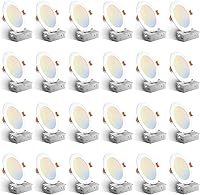
This Sunco set is a practical fit if you want 4-inch slim lights and the ability to select among 2700K, 3000K, 4000K, 5000K, and 6000K. The lights are dimmable from 10% to 100%.
Choose a warmer setting for relaxed meals, then test the room's look before locking in the switch during installation. Skip this option if you want a fixed color temperature or need a different size.
The Ensenior 3-inch lights offer 2700K, 3000K, 3500K, 4000K, and 5000K settings, plus dimming from 5% to 100%. Their compact size can help when you want smaller light points around a table.
They provide 500 lumens each, so plan the number and placement around the light needed in the room. Don't assume a smaller fixture will automatically give enough illumination for every dining space.
Should recessed lights be the only dining room lights?
Usually, recessed lights work better as general lighting alongside a table fixture. A pendant or chandelier can draw attention to the table while the recessed lights help illuminate the surrounding floor and walls.
A single central fixture can leave corners dim, especially in a long or open dining room. Recessed lights add coverage beyond the table, while a dimmer lets you lower them when the central fixture carries the mood.
If your dining room also serves as a homework or project space, plan for brighter task lighting separately. A fixed ceiling layout may not suit every activity equally well.
Which recessed light size fits a dining room?
Choose a size based on the ceiling layout and the level of light you need, not the table alone. Smaller fixtures create more discreet light points, while larger ones can provide more light per fixture.
A 4-inch light may suit a room where you want a restrained ceiling appearance. A 6-inch option can make sense when you need more output from each fixture, but consider glare and the room's other lights.
This Ensenior set uses a fixed 5000K daylight color and supports dimming from 5% to 100%. Its 1200-lumen output is a reason to plan placement carefully so the room does not feel overly bright during meals.
Choose it when daylight color and higher output fit the room's other uses. If you prefer a warmer dining atmosphere, a selectable or warmer color option may be a better match.
For a closer look at diameter choices, see recessed light sizes explained. Check the fixture's cutout and installation requirements against your ceiling before you buy.
What should you check before installing dining room lights?
Confirm the ceiling structure, wiring plan, and light spacing before cutting openings. Check the light instructions and local electrical requirements, and contact a qualified electrician if you're unsure about wiring or the ceiling conditions.
Mark each proposed opening, then look at the layout from the table and from the main entry. Make sure lights won't land over a beam, clash with a ceiling fan, or create a bright spot where someone sits.
If the ceiling has limited clearance or obstacles, review the installation needs for recessed lights with a junction box. A slim design may help with fit, but the specific ceiling and wiring still determine what can be installed.
How do you choose recessed lighting for a dining room?
For recessed lighting in a dining room, choose the layout before the fixture, then match brightness, size, and color to how you use the space. Keep the table evenly lit, use a dimmer, and pair ceiling lights with a focal fixture if you want a softer dining scene.
Choose the Sunco 4-inch option for selectable color and a slim profile, the Ensenior 3-inch option for smaller light points, or the Ensenior 6-inch option when higher output and daylight color suit the room. Use the living room guide or the bedroom guide if you are planning nearby spaces too.
Frequently asked questions
How many recessed lights should a dining room have?
The right number depends on the room size, ceiling height, table position, and how much light other fixtures add. Start with the table as the anchor, then sketch a balanced layout around it.
Avoid adding lights just to fill empty ceiling space, and use a dimmer to adjust the overall level.
Should recessed lights go directly over a dining table?
They can sit over the table area, but avoid placing a bright downlight directly above a seated person's head. Put the lights in a balanced pattern around the table, and use a pendant or chandelier as the visual focal point if you want one.
What color temperature is best for dining room recessed lights?
Warm white, often around 2700K or 3000K, can give a dining room a relaxed feel. A selectable-CCT light lets you choose a color temperature before installation, but set every light to the same option so the ceiling looks consistent.
Do recessed lights need to be centered over the dining table?
Center the overall layout on the table when its position is fixed, while keeping individual lights spaced evenly around it. If the table moves or the room serves several purposes, center the layout on the usable room area and make sure the table still receives enough light.