How Much to Install Recessed Ceiling Lights
The cost to install recessed ceiling lights usually runs from about 100 dollars to 350 dollars per light in the US, including the fixture and labor. The total depends on whether you're swapping old cans or cutting new holes, how many lights you add, and whether the ceiling is finished or still open.
On this page (9 sections)
- What drives how much to install recessed ceiling lights?
- Does a retrofit cost less than a new installation?
- How much does labor add to recessed light installation?
- How much do the fixtures themselves add?
- Where do ceiling access and patching costs come from?
- Do you need a housing or can for every light?
- How do light count and room size change the total?
- Which add-ons raise the installation cost?
- How can you keep the installation bill down?
The cost to install recessed ceiling lights usually runs from about 100 dollars to 350 dollars per light in the US, including the fixture and labor. The total depends on whether you're swapping old cans or cutting new holes, how many lights you add, and whether the ceiling is finished or still open.
Contractors quote per light or per job, and the range is wide because the electrical work changes so much from one home to the next. A single retrofit in a hallway and eight new lights in a kitchen are very different projects.
What drives how much to install recessed ceiling lights?
The installation estimate is set by four things: the number of lights, whether wiring already exists, the ceiling condition and local labor rates. Fixture cost matters, but labor and electrical work carry most of the bill.
A like-for-like swap in an existing can takes far less time than cutting into a finished ceiling. Electricians charge for travel, inspection and patching time as well as the wiring itself.
Rates vary by region. Metro areas and older homes with awkward access cost more, while open, unfinished ceilings cost less.
Ask for an itemized quote so you can see which of these factors is pushing your number up.
Does a retrofit cost less than a new installation?
Yes. A retrofit into an existing can is the cheapest path, because the hole is already cut and the cable is already there.
You're mostly paying for labor time and the trim or wafer.
New installation adds rough-in wiring, hole cutting and patching. In a finished ceiling, an electrician may need to fish cable through joists or open small access points.
Canless designs speed up the job. A slim wafer needs only a 2 inch ceiling gap and snaps in with spring clips, so it skips the metal housing and the extra framing a can sometimes needs.
That's why recessed lighting cost often lands lower for wafer-style lights than for traditional cans. An unfinished ceiling with open joists is the cheapest of all to wire, since the electrician can run cable without fishing or patching.
How much does labor add to recessed light installation?
Labor is usually the largest single part of the bill. Electricians typically charge an hourly rate plus a service or minimum charge, and some quote a flat price per light.
The labor time depends on access. An attic above the ceiling lets the electrician work from above, while a room with no attic access needs ladder work and careful fishing.
Plan for a licensed electrician whenever a new circuit, a switch change or fresh cable is involved. Fixture swaps that reuse existing wiring are the one part many homeowners handle themselves.
How much do the fixtures themselves add?
Fixtures are the smaller, more predictable part of the total. The spread between budget and premium lights is real, but it rarely changes the job by more than the labor does.
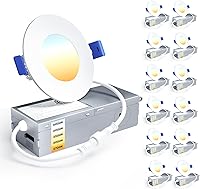
A 12-pack of 4 inch 5CCT wafers covers a whole room at a modest per-light cost. Larger 6 inch wafers cost a little more per unit but throw more light, so fewer are needed.
The Ensenior set gives you 750 lumens at 9W from each light. The 5-color switch lets you set the tone before installation, which removes the return trip when the light looks wrong in the room.
Its 2 inch clearance suits tight joist bays, and the spring clips and cut-out template come in the box. Each unit measures just 0.94 inch deep, so it sits nearly flush with the drywall and leaves the ceiling looking clean.
The aluminum body is a practical detail for a long-lived install. It dissipates heat better than plastic, so the finish resists yellowing over the years.
Ensenior backs the set with a 50,000-hour rating and a 5-year warranty. That combination keeps the fixture bill low and the fitting quick, and a wafer set like this is why many remodels choose canless over traditional housings.
Do the housing and trim choices change the fixture cost?
Yes. A housing and a separate trim are two parts to buy and fit, while a wafer combines the light, driver and trim in one unit.
That matters when you're pricing a whole room.
A housing set makes sense when the trim look is the priority. It gives you a base that accepts different trim styles, so you can match the room's finish instead of committing to one wafer face.
Where do ceiling access and patching costs come from?
Finished ceilings add cutting, cable fishing and drywall repair to the bill. Each light needs a clean hole, and each cable run needs a path that doesn't hit a joist, duct or pipe.
Patching and repainting are separate line items in many quotes. Factor in paint if the ceiling is a visible living area and you want the holes to disappear.
A template in the box helps the installer mark a consistent cutout. It doesn't remove the repair cost, so ask whether patching is included before you sign.
Do you need a housing or can for every light?
Not always. Canless wafers skip the housing, while traditional can lights use one.
The type you choose affects both fixture cost and labor time.
A wafer like the Amico set installs with a cutout, a cable connection and spring clips. That's fewer parts than a can and trim assembly.
The flip side is less flexibility, since the trim and light are one piece.
The Amico set delivers 1050 lumens at 12W per light. The 5-color switch and IC rating make it a fit for kitchens and insulated ceilings.
It's damp rated for bathrooms and covered outdoor areas. Its 2 inch clearance works in tight spaces.
The cutout runs 6.2 to 6.6 inches, with 6 1/4 inches advised, so the hole size needs to be right the first time.
Choose a housing when you want the flexibility of separate trim styles. The Designers Fountain housings accept 6 inch splay, magnetic, gimbal and deep baffle trims.
That makes them useful when the trim look matters more than speed.
The set includes 10 AWG wire nuts, reversible bar hangers with an integral nail, and a hinged J-box. The housings block airflow between the attic and living space.
They're IC rated for direct insulation contact with no minimum clearance. The aluminum build and cETLus listing suit patios and low plenum spaces as well as living rooms.
That's a good match for a finished room where the light positions are already planned.
How do light count and room size change the total?
More lights mean a bigger bill, but the per-light cost often drops because the electrician is already on site. A whole-room layout costs less per light than a single isolated install.
One light per 25 to 40 square feet of ceiling is a common planning rule. A small bathroom might need one or two, while a large living room might need six or more.
Light size ties in here. A 6 inch wafer throws more light than a 4 inch one, so you can plan a wider spread with fewer fittings.
Our guide to recessed lighting sizes explains how 3, 4, 5 and 6 inch lights differ in cutout and coverage. That's worth checking before you lock a count, and so is 3 inch recessed lighting if you're working with tight spots.
Which add-ons raise the installation cost?
Smart switches, dimmers, extra circuits and ceiling repair are the usual extras on a quote. Each one adds materials and time, and some need a separate permit or inspection.
A dimmer is a sensible add-on for a living room or bedroom. Dimmable recessed lighting needs a compatible dimmer and bulbs or wafers rated for it.
A basic on/off switch is cheaper and simpler. The Ensenior set dims from 5% to 100% without flicker or buzz, so a matching dimmer is the only extra part you need there.
IC-rated lights matter when insulation sits against the fixture. IC rating means direct contact with insulation is allowed, which suits attic ceilings.
A non-IC light in an insulated ceiling needs clearance, and that can limit where you place it. The Amico and Ensenior wafers and the Designers Fountain housings are all IC rated, so insulated ceilings are not a blocker for any of the three.
How can you keep the installation bill down?
The biggest savings come from reusing what's already there. Swapping old cans for wafers or new trims avoids cutting and patching.
Buy a set with the features you need up front. A 5CCT switch removes the cost of returning lights that read too warm or too cool.
IC and damp ratings keep you from buying replacements later for a bathroom or insulated ceiling.
Getting several quotes is worth the effort. Ask each electrician whether patching and paint are included, and how many hours the job should take.
For a fuller picture of what you'll pay in total, this guide to what makes LED recessed lights cost more or less covers the price side of the decision.
If the wiring is already in place, a wafer set like the Ensenior 4 inch 12-pack is the pick for most rooms. It's the cheapest way to install recessed ceiling lights and gives you the tone control that matters most.
For a finished ceiling where you want to choose the trim later, go with the Designers Fountain housings. For a wider light spread in a big room, choose the Amico 6 inch set.
Pick the Ensenior for a whole-room retrofit and you'll keep both the fixture bill and the labor time low.
Frequently asked questions
Is installing recessed lights a DIY job?
Only the fixture swap is realistic for most homeowners. Cutting new holes, running cable through a finished ceiling and tying into a circuit are electrical work, so hire a licensed electrician when the wiring isn't already in place.
Do canless wafer lights cost less to install than can lights?
Canless wafers usually cost less to install because they skip the metal housing and need only a 2 inch ceiling gap. The electrical rough-in still drives most of the bill, so the saving is a modest part of the total.
How many recessed lights does a room need?
A rough planning rule is one light per 25 to 40 square feet of ceiling, then adjust for ceiling height and task areas. Spread them evenly and keep spacing consistent so the light reads as a pattern rather than a scatter.
Does the type of ceiling change the installation cost?
Yes. An unfinished ceiling with open joists is the cheapest to wire.
A finished ceiling needs holes cut, cable fished and patched afterward, which adds labor time and patching materials to the estimate.