How Long Do LED Recessed Lights Last?
LED recessed lights can be rated for tens of thousands of hours, but how long they last in your ceiling depends on use, heat, installation, and the fixture’s components.
On this page (9 sections)
- How long do LED recessed lights last in years?
- What does an LED lifespan rating mean?
- What affects how long an LED recessed light lasts?
- How should you choose an LED recessed light?
- Do integrated LED recessed lights need bulb changes?
- What are signs that an LED recessed light is failing?
- How can you help LED recessed lights last longer?
- When should you replace an LED recessed light?
- How long do LED recessed lights last, and which should you choose?
LED recessed lights can be rated for tens of thousands of hours, but how long do LED recessed lights last in a real ceiling depends on daily use, heat, wiring, dimmer compatibility, and fixture design. A 50,000-hour rating works out to about 17 years at 8 hours of use a day.
That calculation helps with planning. It doesn't predict when an individual light will fail, so compare installation needs, warranty terms, and whether you can replace parts before choosing a fixture.
How long do LED recessed lights last in years?
A light's rated hours translate into years according to how many hours you use it each day. At 8 hours daily, 25,000 hours is about 8.6 years and 50,000 hours is about 17 years.
| Rated life | 4 hours a day | 8 hours a day | 12 hours a day |
|---|---|---|---|
| 25,000 hours | About 17 years | About 8.6 years | About 5.7 years |
| 50,000 hours | About 34 years | About 17 years | About 11.4 years |
These are arithmetic estimates, not service-life guarantees. A fixture might stop working sooner if a component fails, or continue operating beyond the estimated period.
An integrated LED fixture combines the LEDs with a driver, wiring, and other parts. A failure in any one of them can affect whether the light works, even if the LEDs have not reached their rated hours.
What does an LED lifespan rating mean?
A rated lifespan is an estimate of operating life under specific conditions, not a precise failure date. LED lifetime may refer to the point when light output has declined to a stated level, rather than the hour when a fixture suddenly stops working.
A warranty is a separate commitment with its own terms and period. Check what it covers and how to make a claim instead of assuming a long hour rating comes with equally long coverage.
Is a 50,000-hour LED rating realistic?
A 50,000-hour rating gives you a useful comparison point, but actual conditions in a ceiling can differ from the conditions behind that estimate. Amico and Ensenior both state a 50,000-hour lifespan for their 6-inch canless lights; Ensenior also includes a 5-year warranty.
Treat the hour rating as one part of your decision. Check the fixture's ceiling clearance, insulation rating, dimmer needs, and warranty too.
What affects how long an LED recessed light lasts?
Heat, electrical conditions, moisture, and installation choices can all affect service life. Choose a fixture rated for your ceiling and room, then follow its installation requirements.
Recessed lights sit in or near a ceiling cavity, where insulation and limited clearance can affect heat management. Confirm whether the fixture is rated for contact with insulation and how much space it needs.
Electrical trouble can show up as flickering, buzzing, or repeated failures. An incompatible dimmer, loose wiring, or voltage outside the fixture's permitted range can cause problems that resemble a failed LED.
Moisture ratings also matter. Damp-rated does not mean waterproof, so check the fixture's location limits before placing it near a shower or in another area exposed to water.
Can heat shorten LED life?
Heat can contribute to earlier failure, so match the fixture to the ceiling conditions and follow its clearance and insulation instructions. This is especially important in an insulated ceiling or one with little space above the drywall.
Canless wafer lights use a thin panel and a junction box, while traditional recessed fixtures use a housing. If you're deciding which type suits your ceiling, our guide to integrated LED recessed lighting explains how integrated designs work.
Do dimmers affect LED recessed lights?
A dimmer can cause flicker or limited dimming when it's incompatible with the fixture. Check both sets of instructions before installation, and confirm compatibility with the exact dimmer model.
Ensenior describes its light as dimmable from 5% to 100%. DAMINY describes its light as compatible with most dimmers, with a 5% to 100% dimming range, but you should still confirm the match for your setup.
If flicker starts after installation, check the dimmer and wiring before deciding the fixture has failed. Don't assume every dimmable light will work smoothly with every control.
How should you choose an LED recessed light?
Choose by matching the fixture to your ceiling, lighting plan, and controls. Rated hours matter, but pack size, brightness, color options, clearance, and moisture rating determine whether the light fits your project.
For a small replacement job or a room where you want to set color before installation, Amico's 12-pack offers five selectable color temperatures from 2700K to 5000K. Its 1050-lumen output suits a buyer comparing brightness as well as rated life; skip it if you need a fixture for direct water exposure or want a documented dimming range.
Ensenior's 12-pack is a fit when you want five color choices, 1200 lumens, and the stated 5-year warranty. Its 50,000-hour rating and dimming range make it worth considering for a larger room plan, but compare the warranty and dimmer requirements with your priorities.
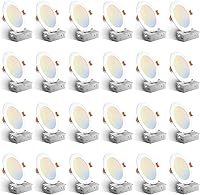
DAMINY's 24-pack suits a project with many matching 6-inch openings, plus five selectable color temperatures and dimming. Skip a large pack if you're replacing only one or two lights, and note that it is a canless fixture rather than a retrofit for an existing can.
All three are 6-inch canless lights with thin profiles and junction boxes. Before buying, measure the cutout, confirm the ceiling clearance and wiring, and check whether your room needs a damp-rated fixture.
Do integrated LED recessed lights need bulb changes?
Many integrated LED recessed lights don't have a separate bulb to change. If one stops working, you may need to replace the fixture, though some designs allow a driver or another component to be serviced.
Check whether replacement parts are available and what the warranty covers before you buy. If you already have can housings, a retrofit light may be a better fit, depending on the fixture design and the size of your existing cans.
For canless fixtures, record the cutout size and wiring setup so a replacement can fit the opening and connect safely. Our guide to LED recessed light types, sizes, and packs can help you compare formats.
What are signs that an LED recessed light is failing?
Flickering, dimming, color changes, buzzing, or a light that won't turn on can signal a problem, but they don't prove the LED itself has failed. A dimmer, switch, wiring connection, or driver can cause similar symptoms.
Notice whether the problem affects one light or several on the same circuit. If you see damaged wiring or smell burning, turn off power and contact a qualified electrician.
Don't open a powered fixture or junction box. If you're unsure how to identify a fault safely, ask an electrician to inspect it.
How can you help LED recessed lights last longer?
Use a fixture suited to the ceiling and location, follow its installation instructions, and pair it with a compatible dimmer. Those steps reduce common sources of trouble without guaranteeing a particular service life.
Before installation, verify the cutout size, insulation clearance, voltage, and moisture rating. If you plan to dim the lights, confirm the control is compatible with the fixture.
After installation, pay attention to repeated flicker, unusual buzzing, or changes in light output. Check for an underlying dimmer or electrical issue instead of repeatedly replacing fixtures without diagnosing the cause.
When planning a replacement, compare recessed light brightness by lumens and check how many watts LED recessed lights use. For related cost factors, see what makes LED recessed lights cost more or less.
When should you replace an LED recessed light?
Replace a fixture when it no longer works and the cause can't be repaired, or when a qualified electrician recommends replacement. If it still works but flickers, dims, or changes color, check the dimmer and connections first.
With a canless fixture, replacement may mean changing the light panel and junction box together. Follow the fixture instructions and local electrical requirements, and use an electrician if you aren't equipped to do the work safely.
How long do LED recessed lights last, and which should you choose?
For how long LED recessed lights last, divide the rated hours by your daily use and then by 365 to estimate years. Choose Amico when five color options and a 12-pack suit your plan, Ensenior when you value its stated warranty and 1200-lumen output, or DAMINY when a 24-pack and dimming fit a larger project.
Before deciding, confirm the cutout, ceiling clearance, moisture rating, and dimmer match. The recessed lighting cost guide can help you weigh project costs alongside fixture life.
Frequently asked questions
How many years do LED recessed lights last?
The years depend on rated hours and daily use. A 50,000-hour rating works out to about 17 years at 8 hours a day.
That is a planning estimate, not a promise that every fixture will last that long.
Heat, power conditions, and component failure can shorten service life.
Do integrated LED recessed lights need bulb replacement?
Many integrated LED recessed lights don't use a separate replaceable bulb, so a failed light may require replacing the fixture or its driver if that part can be serviced. Check the instructions and warranty before buying, and confirm a replacement will fit the ceiling opening and wiring.
What makes LED recessed lights fail early?
Excess heat, poor ventilation, an incompatible dimmer, voltage problems, moisture beyond the fixture's rating, or a failed driver can shorten a light's working life. Choose a fixture suited to the ceiling and location, follow its wiring instructions, and check dimmer compatibility if the light flickers or buzzes.
Should I replace a recessed LED light if it flickers?
Not always. A loose connection, dimmer mismatch, or switch problem can cause flicker.
Turn off power and ask a qualified electrician to inspect it if you aren't sure how to diagnose the cause.
If the LED or driver has failed, replacement may be needed, depending on the fixture design.