LED Can Lights vs Regular Can Lights: Which to Buy? (November 2026)
Buy LED can lights if you want long-life, low-heat lighting; choose regular can lights only when you want to swap bulbs freely. In the led can lights vs regular can lights decision, the fixture you already have matters more than the light source.
On this page (9 sections)
- What is the real difference between LED can lights and regular can lights?
- LED vs regular can lights side by side
- Which one fits the cans you already have?
- How much light and color control do you get?
- Which is easier to dim smoothly?
- What about heat, safety and ceiling insulation?
- Where each type works best in a home
- Who should buy which?
- Which should you buy?
Buy LED can lights if you want long-life, low-heat lighting; choose regular can lights only when you want to swap bulbs freely. That is the short answer to led can lights vs regular can lights, and the longer one depends on the cans already in your ceiling.
Regular can lights are the housings, trims and bulbs that have lit homes for decades. LED can lights now come in two forms: a retrofit fixture that drops into an existing can, or a canless wafer that needs no housing at all.
This comparison covers what changes when you switch and where each setup wins. It closes with the fixture we would buy for a given room.


What is the real difference between LED can lights and regular can lights?
The housing is often the same; the light source is what changes. A regular can light holds a bulb you replace when it burns out, while an LED can light usually has the LEDs built in or uses an LED bulb.
A traditional can is a metal housing recessed in the ceiling with a trim ring and a socket. You choose the bulb, so you can swap a warm flood for a brighter one without touching the fixture.
An LED retrofit keeps that housing but replaces the bulb-and-trim setup with a flat LED unit on an E26 base. An integrated canless wafer skips the housing and clips straight into a cut hole.
The LED versions draw less power for the same light and run cooler. The regular version keeps the flexibility of separate bulbs.
Most of the decision comes down to how much of that flexibility you actually use.
If you are also weighing housing shapes, our wafer lights vs can lights comparison covers that narrower choice.
LED vs regular can lights side by side
LED wins on efficiency and heat; regular cans win on bulb choice and simple repairs. The table below puts the practical differences in one place.
| Feature | LED can lights | Regular can lights |
|---|---|---|
| Light source | Built-in LEDs or LED bulbs | Replaceable incandescent or halogen bulbs |
| Power draw | Low, such as 12W for 1050 lm | Higher for the same brightness |
| Heat | Low surface heat | Bulb and housing get hot |
| Bulb choice | Fixed in a retrofit set, or limited to LED bulbs | Any compatible bulb |
| Color temperature | Often selectable at install | Set by the bulb you choose |
| Dimming | Built into many LED fixtures | Depends on the bulb and dimmer |
| Lifespan | Long, no bulb changes on integrated units | Bulb changes as they burn out |
| Installation | E26 base for retrofits; cut hole for wafers | Requires a housing and trim |
The efficiency gap is the headline. The Amico 6 inch wafer runs 1050 lumens on 12 watts, and Amico says that matches a 110W halogen while saving up to 90% in energy costs a year.
The Sunco BR30 draws 11 watts to replace a 65W bulb.
Heat matters too. Amico says its retrofit lights are IC rated, sit in contact with insulation and do not produce excessive heat.
A regular can with an incandescent bulb gets far hotter and needs more clearance.
The shape of the light also differs. The Sunco BR30 is a flood bulb with a 110 degree beam angle, so it spreads light wide across a floor.
The Amico retrofits and wafers are downlights built for a concentrated pool of light straight below the ceiling.
Which one fits the cans you already have?
If you have working cans, an LED retrofit is the easiest switch; if you have no housing, a canless wafer is the cleaner path. The state of your ceiling decides this more than the light itself.
A retrofit set like the Amico 4 Pack 5/6 inch 5CCT LED uses a universal E26 base, and Amico says installation takes about 3 minutes per light. You keep the housing and trim opening and swap in the LED unit.
A canless wafer like the Amico 12 Pack 6 Inch Canless Wafer needs a cut hole. Amico lists a 6.2 to 6.6 inch cutout with a 6 1/4 inch target and only 2 inches of ceiling depth.
That suits a new ceiling or a remodel where no can was ever installed.
Regular can lights need a housing before a bulb can go in. If the housing is already there, adding a bulb is trivial.
If it is not, you are installing a can either way.
The E26 base is the common thread
The Amico retrofit sets and the Sunco BR30 bulbs all use the E26 medium base, and the Sunco BR30 is the most literal plug-and-play of the group. The wafer is the outlier because it has no socket at all.
That split is worth checking before you order. If you can unscrew the bulb in your ceiling, a retrofit or a BR30 will fit.
If there is no socket, only the wafer works.
Our guide to LED recessed lights covers more fixtures if you are still choosing between models.
How much light and color control do you get?
LED sets offer selectable color temperatures in one fixture, while regular cans depend on whichever bulb you screw in. That flexibility changes how you plan a room.
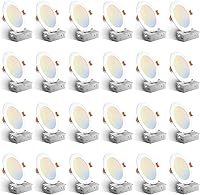
The Amico 4 Pack and the Amico 24 Pack both offer five color temperatures from 2700K to 6000K in one unit. You slide a switch during install and pick the light that suits the room, so you avoid buying the wrong color and returning it.
The Sunco BR30 bulbs are fixed at 5000K daylight. That is a crisp, cool light for a kitchen or workspace, but not a soft evening glow for a bedroom.
Regular can lights let you change color later by changing the bulb. That is a real advantage if your taste or the room's use might shift.
An integrated LED fixes the color at install unless the unit itself offers a selector.
Brightness is close across the options. The Amico retrofits put out 950 lumens and the wafer puts out 1050.
The Sunco BR30 lands at 850 lumens.
The color sets are not identical, either. The two Amico retrofit packs offer 2700K, 3000K, 4000K, 5000K and 6000K, while the canless wafer offers 2700K, 3000K, 3500K, 4000K and 5000K.
If you want a 3500K middle setting, the wafer has it. If you want the cooler 6000K, the retrofits do.
Which is easier to dim smoothly?
Both LED and regular setups can dim, but the dimmer and the light have to match. Flicker and dropouts usually come from a mismatch, not from the light type alone.
The Amico retrofit sets dim from 10% to 100%, and Amico notes compatibility with most dimmers except smart dimmers. That range covers a soft evening level as well as full brightness.
The Sunco BR30 bulbs are dimmable. A regular can with a dimmable incandescent or halogen bulb also dims, though those bulbs run hotter and use more power.
Before buying for a whole ceiling, test one fixture on the dimmer you already have. Some older dimmers were designed for incandescent loads and behave poorly with LEDs.
A modern LED-rated dimmer is the safer match.
Smart dimming is the one place to plan ahead. If you want app or voice control, check that the fixture works with your system rather than assuming every LED set does.
What about heat, safety and ceiling insulation?
LED can lights run cooler and are often rated for contact with insulation; regular cans with incandescent bulbs need more care. This matters most in a well-sealed attic ceiling.
The Amico retrofit sets are IC rated and ETL listed. Amico says they sit surrounded by insulation without producing excessive heat.
The Amico canless wafer is IC rated too and needs just 2 inches of ceiling space.
A regular can light with a hot bulb needs clearance from insulation and can warm the ceiling above it. In a tight, insulated ceiling, that heat has fewer places to go.
Lower heat also helps in rooms you leave lit for hours. The Sunco BR30 draws 11 watts instead of 65, so it produces less waste heat and less strain on the fixture.
If your ceiling has blown-in insulation packed around the cans, an IC-rated LED set is the more comfortable fit. That single rating can decide the purchase.
Where each type works best in a home
LED can lights suit long-running rooms and tight ceilings; regular can lights suit spaces where you like changing bulbs. Room use narrows the list quickly.
Kitchens and living rooms often stay lit for hours, so LED efficiency and low heat pay off. The Amico retrofits are damp rated, so they also work in bathrooms and hallways.
Basements and covered outdoor areas with humidity favor a damp-rated LED wafer. The Amico canless set is damp rated for bathrooms, basements and covered outdoor areas, though it should not get direct water spray.
Regular can lights fit spaces where you want to try different bulbs over time. A reading corner, a hallway or a rental where you do not control the fixtures may be fine with the bulbs already there.
The Amico wafers include a junction box and an instruction manual in the box, which helps on a remodel. Amico also says the wafer housing is aluminum rather than plastic for heat dissipation, with a 50,000 hour rated life.
Our look at recessed lighting vs surface mount helps if you have not yet decided whether recessed is right for the room at all.
Who should buy which?
Most people should buy an LED retrofit set; the exceptions are people who want bulb freedom or who are building a new ceiling. Here is how the choices split by buyer.
Pick LED can lights if you want fewer bulb changes
An LED retrofit set is the pick when you already have 5 or 6 inch cans and want to stop changing bulbs. The Amico 4 Pack fits on an E26 base, dims smoothly and gives five color settings in one unit.
Choose it when a ceiling runs for hours a day and you want lower power and less heat. It is also the simpler option for a bathroom or hallway because it is damp rated.
Pick LED wafers if you are building or remodeling
Go canless when there is no housing to work with. The Amico 12 Pack 6 Inch Canless Wafer clips into a cut hole and needs only 2 inches of ceiling depth.
It suits a new ceiling, a basement finish or a remodel where you would rather not install traditional cans. Measure the cutout carefully, since the fit depends on it.
Pick regular can lights if bulb choice matters
Regular can lights make sense when you want to change color or brightness later without replacing the fixture. They also fit a space where a can is already installed and you only need bulbs.
If you keep the housing and just want better bulbs, the Sunco BR30 pack gives you a dimmable LED flood on a standard E26 base. It is a low-effort upgrade without changing the fixture.
Our Ensenior vs Sunco recessed lighting comparison is useful if you are weighing brands at this stage.
Which should you buy?
Buy LED can lights for most rooms, because lower power, lower heat and long life outweigh the loss of bulb swapping. The led can lights vs regular can lights choice lands on LED for a typical home.
Pick the Amico 4 Pack 5/6 inch 5CCT LED when you have existing cans and want an easy, dimmable retrofit. Pick the Amico 12 Pack 6 Inch Canless Wafer for a new or remodeled ceiling with no housing.
Pick the Sunco BR30 bulbs when you want to keep your current fixture and only change the bulbs. Pick the Amico 24 Pack when you are updating many rooms at once and want matching light throughout.
For more choices in the same family, browse the LED recessed lighting picks we compare elsewhere on the site.
Our score weighs specs, features and buyer feedback against what you're shopping for.
Frequently asked questions
Are LED can lights better than regular can lights?
LED can lights use less power and put out far less heat for the same brightness, so they suit ceilings you leave on for hours. Regular can lights keep the option of swapping bulbs freely.
Pick LED for efficiency and long life, and pick regular when bulb choice matters most.
Can I put an LED bulb in a regular can light?
Yes, if the can takes a standard E26 base bulb. A BR30 LED bulb such as the Sunco flood drops into most existing cans.
Check the trim opening first, since a deep or oddly shaped can may not show the bulb evenly.
Do LED can lights last longer than regular bulbs?
A typical LED recessed light is rated for many more hours than an incandescent or halogen bulb. The Sunco BR30 lists a 25,000 hour life, and integrated fixtures like the Amico sets skip bulb changes altogether.
Actual life depends on dimming, heat and how often the light runs.
Which type is easier to install?
A retrofit LED set is easiest when you already have cans, because it screws into the existing E26 base like a bulb. A canless wafer needs a measured hole and clips into the ceiling instead.
New construction with no housing favors the wafer, while an old ceiling favors the retrofit.
Do LED can lights dim smoothly?
The Amico retrofit sets adjust from 10% to 100% on most dimmers, though not smart dimmers. The Sunco BR30 bulbs are dimmable as well.
Match the dimmer to the light and test one fixture before committing to a whole ceiling.